
Insomnia in Children, Teens & Young Adults in Florida
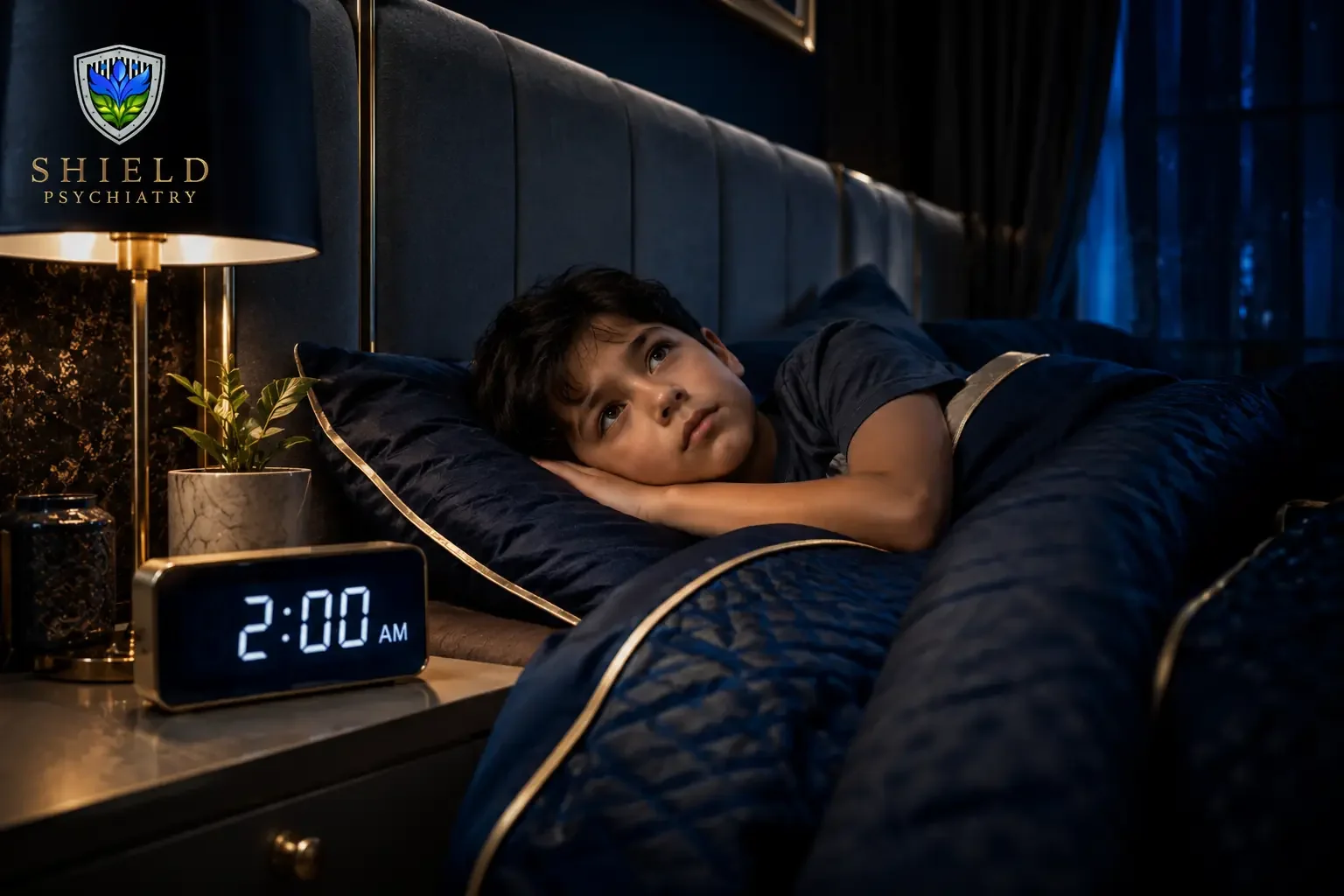
Insomnia is more than a few bad nights — it's a persistent pattern of trouble falling asleep, staying asleep, or waking too early with real daytime consequences. At SHIELD Psychiatry, Dr. Akers provides evidence-based CBT-I through the Sleep Reset & Rise™ program, with medication support and parent coaching for children, teens, and young adults ages 5–25 across Florida.
Understanding Insomnia · Signs by Age · Pediatric Sleep · Florida
What Insomnia Looks Like in Children, Teens & Young Adults
Insomnia in young people rarely looks the same across ages — what keeps a 7-year-old awake is very different from what disrupts a college student's sleep.
More Than a Few Bad Nights
Chronic insomnia in children and teens is defined as difficulty falling asleep, staying asleep, or waking too early — occurring at least three nights per week for three or more months — with meaningful daytime consequences including fatigue, irritability, attention problems, school difficulty, and mood changes.
In young people, insomnia is rarely isolated. It commonly co-occurs with anxiety, ADHD, depression, autism spectrum disorder, and mood dysregulation — each of which can both cause and worsen sleep problems. Untreated insomnia in turn worsens attention, emotional regulation, and academic performance.
At SHIELD Psychiatry, sleep is evaluated in the context of the full clinical picture — including co-occurring conditions, medications, screen habits, environment, circadian timing, and developmental stage — before building an individualized treatment plan.
CBT-I · Sleep Reset & Rise™ · Sleep Metrics · Telehealth Florida
CBT-I & the Sleep Reset & Rise™ Program
Cognitive Behavioral Therapy for Insomnia (CBT-I) is the gold-standard, evidence-based treatment for chronic insomnia — more effective than medication long-term and without dependency risk.
CBT-I: The Evidence-Based Standard
CBT-I works by identifying and changing the thoughts, behaviors, and habits that perpetuate chronic insomnia. Unlike sleep medications, CBT-I produces durable improvements that last after treatment ends — making it the first-line recommendation for chronic insomnia in children, teens, and young adults.
At SHIELD Psychiatry, CBT-I is delivered through the Sleep Reset & Rise™ program — Dr. Akers' structured, telehealth-based sleep intervention adapted for children, teens, and young adults across Florida.
Treatment is tailored to neurotype and context — adjusted for ADHD-related circadian disruption, anxiety-driven hyperarousal, autism-related sensory and routine factors, and the specific demands of college or work schedules.
Sleep Metrics We Track
Progress is measured using a sleep diary and these four clinical markers:
Ratio of time asleep to time in bed. Improves with stimulus control and sleep restriction titration.
Time to fall asleep after lights out. Reduced through stimulus control and wind-down routines.
Wake After Sleep Onset — time spent awake overnight. Addressed through sleep consolidation strategies.
Consistency of sleep/wake timing. Anchors the circadian rhythm and prevents weekend sleep disruption.
What CBT-I Treatment Includes
- Sleep Diary Baseline — Tracking sleep timing, quality, and patterns before intervention
- Stimulus Control — Rebuilding the bed-sleep association to reduce hyperarousal at bedtime
- Sleep Restriction Titration — Consolidating sleep to build drive and improve efficiency
- Circadian Anchoring — Morning wake anchor, light exposure, and consistent sleep/wake timing
- Wind-Down Routine — Screen curfew, caffeine timing, relaxation sequence
- Cognitive Restructuring — Addressing catastrophic thoughts about sleep and performance anxiety
- Mind-Body Skills — Breathing, progressive muscle relaxation, guided imagery
- Relapse Prevention — Tools for managing future sleep disruptions independently
- Medication Review — Sleep medication support or taper when clinically appropriate
Frequently Asked Questions · Insomnia · CBT-I · Florida
Insomnia Treatment FAQs
- What is CBT-I and why is it better than sleep medication? Cognitive Behavioral Therapy for Insomnia (CBT-I) addresses the underlying thoughts and behaviors that maintain chronic insomnia. Unlike sleep medications, CBT-I produces lasting improvements after treatment ends — without dependency risk or rebound insomnia. It is the first-line evidence-based treatment for chronic insomnia in children, teens, and young adults.
- What is the Sleep Reset & Rise™ program? Sleep Reset & Rise™ is SHIELD Psychiatry's structured, telehealth CBT-I program for children, teens, and young adults ages 5–25 across Florida. Sessions are $150 each and focus on sleep diary review, CBT-I skill-building, and individualized adjustments across the course of treatment.
- Does SHIELD Psychiatry prescribe sleep medication? Yes, when clinically appropriate. Medication options — including melatonin, prescription sleep aids, and medications addressing underlying anxiety or ADHD — may be considered as part of a comprehensive treatment plan. Medication is typically used alongside CBT-I rather than as a standalone treatment.
- Can insomnia treatment help if my child also has ADHD, anxiety, or autism? Yes. Sleep problems are extremely common in children with ADHD, anxiety, and autism. SHIELD Psychiatry addresses sleep in the context of these co-occurring conditions — adapting CBT-I strategies to neurotype and treating underlying conditions that contribute to sleep disruption.
- Does SHIELD Psychiatry accept insurance for sleep treatment? Yes. Insurance-based visits are available through Headway for Aetna Florida, Cigna Florida, SmartHealth Ascension Florida, and Carelon Behavioral Health Florida. Self-pay Sleep Reset & Rise™ sessions are $150. Initial psychiatric evaluations are $349.
- Where in Florida is insomnia treatment available? SHIELD Psychiatry provides telehealth insomnia treatment for families across Florida, including Lutz, Tampa, Wesley Chapel, Orlando, Jacksonville, Miami, Sarasota, Naples, Boca Raton, Palm Beach, and surrounding areas.
Insomnia FAQ
-
Insomnia is a persistent difficulty with falling asleep, staying asleep, or waking up too early despite having the opportunity for sleep. It often leads to daytime fatigue, irritability, trouble concentrating, and reduced quality of life.
-
✔ Acute Insomnia – Short-term sleep difficulties often triggered by stress, illness, or life changes
✔ Chronic Insomnia – Sleep problems lasting three or more nights per week for at least three months
✔ Onset Insomnia – Difficulty falling asleep at the beginning of the night
✔ Maintenance Insomnia – Waking up in the middle of the night and struggling to return to sleep
✔ Early-Morning Awakening Insomnia – Waking up too early and being unable to fall back asleep -
✔ Stress & Anxiety – Worry and racing thoughts can keep the brain in a state of alertness
✔ Poor Sleep Habits – Irregular sleep schedules, excessive screen time, and consuming caffeine late in the day
✔ Medical Conditions – Pain, asthma, acid reflux, and hormonal imbalances can interfere with sleep
✔ Mental Health Disorders – Depression, PTSD, and anxiety disorders are often linked to insomnia
✔ Medication & Substance Use – Stimulants, antidepressants, alcohol, and nicotine can disrupt sleep patterns -
A comprehensive sleep evaluation is conducted to assess sleep habits, underlying medical or psychological conditions, and lifestyle factors affecting sleep. At SHIELD Psychiatry, we provide telehealth-based insomnia assessments to create a personalized treatment plan tailored to your needs.
-
CBT-I is a structured, non-medication approach that helps individuals identify and change negative sleep habits, reduce nighttime anxiety, and improve sleep quality. It includes:
✔ Sleep Education – Understanding sleep cycles and how to optimize them
✔ Cognitive Restructuring – Changing negative thoughts about sleep that contribute to insomnia
✔ Sleep Restriction Therapy – Adjusting sleep schedules to increase sleep efficiency
✔ Relaxation Techniques – Deep breathing, mindfulness, and progressive muscle relaxation to calm the mind and body -
Yes! CBT-I is the most effective long-term treatment for insomnia and is recommended as the first-line treatment by sleep specialists and major health organizations. Medications can provide temporary relief, but behavioral therapy and lifestyle changes offer lasting results.
-
✔ Stick to a Consistent Sleep Schedule – Go to bed and wake up at the same time every day, even on weekends
✔ Limit Screen Time Before Bed – Reduce exposure to blue light from phones, tablets, and TVs
✔ Create a Relaxing Bedtime Routine – Engage in calming activities like reading, meditation, or gentle stretching
✔ Avoid Stimulants & Heavy Meals Before Bed – Limit caffeine, nicotine, and large meals in the evening
✔ Optimize Your Sleep Environment – Keep your bedroom cool, dark, and quiet for better sleep quality -
You can schedule an insomnia consultation or CBT-I treatment session by filling out our online form or contacting us directly. Our telehealth services make expert sleep therapy convenient and accessible from home.

Insomnia Resources & Support
Evidence-informed links to organizations, apps, and books that actually help.
🆘 Quick Help
-
988 Suicide & Crisis Lifeline (U.S.)
24/7 support if insomnia is tied to crisis, anxiety, or safety concerns.
-
SHIELD Psychiatry — Request an urgent callback
For Florida patients; ask about our CBT-I program.
🔹 Trusted Sleep Health Organizations & Websites
-
American Academy of Sleep Medicine (AASM)
Clinical information and patient education from the leading sleep society.
-
National Sleep Foundation (NSF)
Accessible sleep health articles, routines, and sleep hygiene basics.
-
CBT-I Coach (VA/Stanford)
Official companion app for Cognitive Behavioral Therapy for Insomnia.
📱 Apps for Sleep & Relaxation
-
CBT-I Coach
Sleep diary, stimulus control, sleep restriction tools.
-
Calm
Meditations, sleep stories, and relaxation soundscapes.
-
Sleep Cycle
Smart alarm & sleep tracking with trend reports.
-
Pzizz
Adaptive soundscapes and guided relaxation.
📚 Books on Sleep & Insomnia Recovery
-
Say Goodnight to Insomnia — Gregg D. Jacobs
Six-week CBT-I program with structured steps.
-
The Sleep Solution — W. Chris Winter, MD
Practical, humorous science-based guidance.
-
Why We Sleep — Matthew Walker, PhD
Deep dive into sleep science and health impacts.
Resources are educational and not a substitute for medical care. If insomnia persists, consider a formal CBT-I evaluation.